Luxury packaging is going through a phase of profound rethinking. For a long time, luxury was associated with the idea of opulence, often translated into packaging with substantial structures, materials and volumes. Today, as sustainability expectations reshape the industry, the challenge is evolving: it is no longer only about rethinking materials, but about redesigning packaging at its core. Through advanced structural engineering — from collapsible rigid boxes to lighter internal architectures — luxury packaging is entering a new phase, where impact is reduced from the design stage, without reducing desirability, perceived quality or the premium experience.
At ISEM Packaging Group, we follow this transformation closely: through our daily dialogue with brands, our research into materials and processes, our prototyping activity and the development of industrialisable solutions. As an international group operating in luxury packaging, we know that reading the market also means contributing to its sustainable evolution through concrete design choices.
This is the perspective behind our idea of “engineered to reduce”: designing packaging upstream to reduce what is unnecessary — material, volume, weight, space, complexity — while preserving aesthetic quality, protection, functionality and the premium experience.
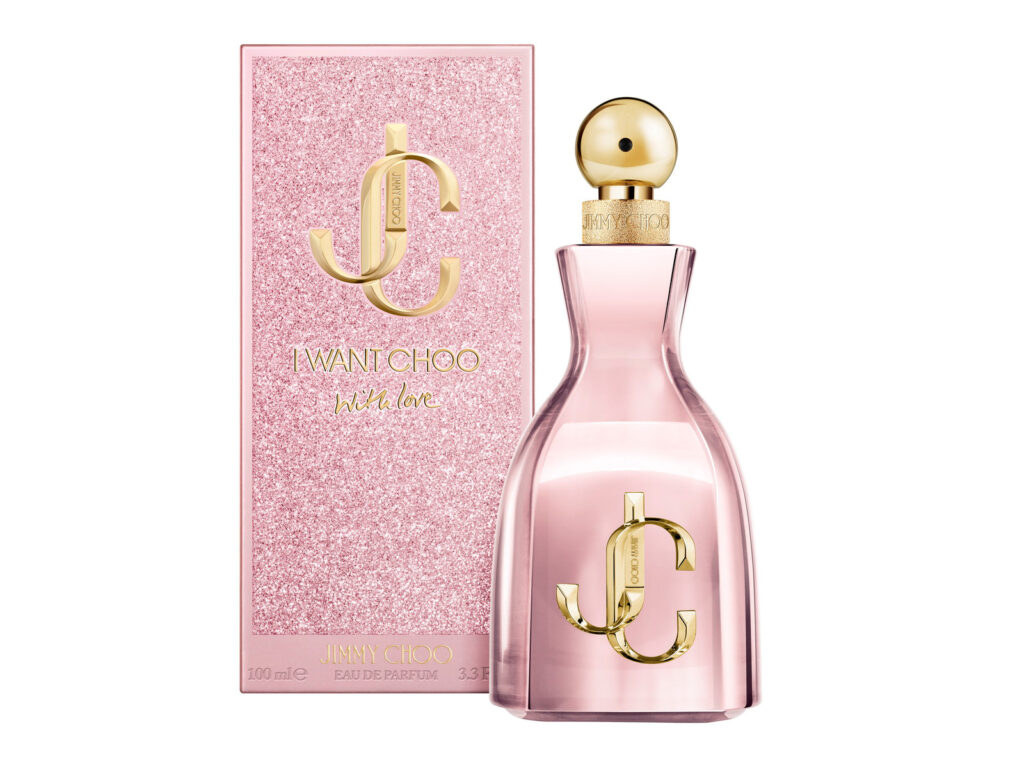
This alternative to traditional glitter is produced using a plant-based cellulose film. Source: “Eco Glitter: an innovation combining luxury aesthetics and responsibility”
A new approach to luxury and impact
According to the report Luxury Packaging: Resolving the Tension Between Creativity and Impact, based on a survey of over 500 executives across the luxury packaging value chain in Europe, the Middle East and Africa, this change is mainly driven by two factors: growing consumer attention to reducing environmental impact and a more demanding regulatory framework, especially in Europe.
The traditional “four Rs” of packaging — reduce, reuse, recycle, recover — remain an important reference: reducing materials, designing reusable packaging, encouraging recycling and recovering energy or materials from non-reusable waste.
However, the report also highlights a relevant shift: reducing packaging volume and weight is considered the top priority for improving sustainability across the luxury packaging supply chain. 43% of respondents identified it as the main area for action.
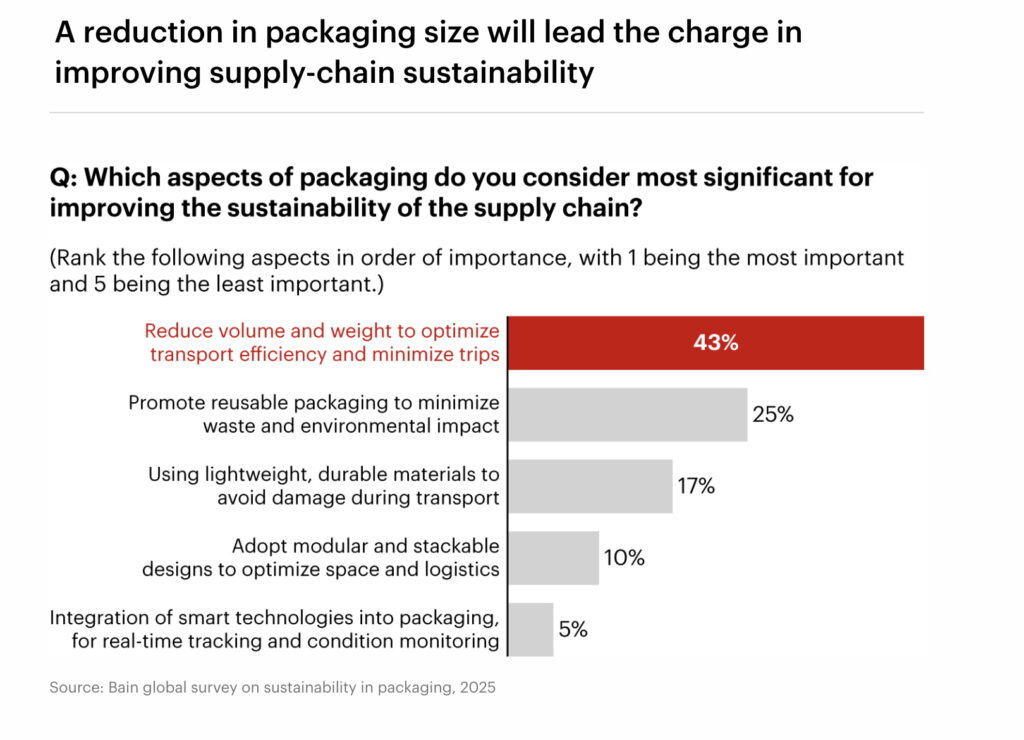
Reducing packaging size will lead the charge in improving supply-chain sustainability.
Source: Bain global survey on sustainability in packaging, 2025.
This data shifts the focus from the individual material to the packaging system as a whole. Reducing volume and weight means acting on transport, loads, storage and handling — in other words, on aspects that generate impact before the packaging even reaches the final consumer.
Market expectations confirm the same direction: in the same survey, half of respondents said they expect sustainable solutions to account for more than 30% of luxury packaging sales within the next three years.
For luxury brands, sustainability and packaging are therefore no longer only reputational topics. They are linked to competitiveness, compliance, industrial efficiency and the ability to respond to a new concept of value.
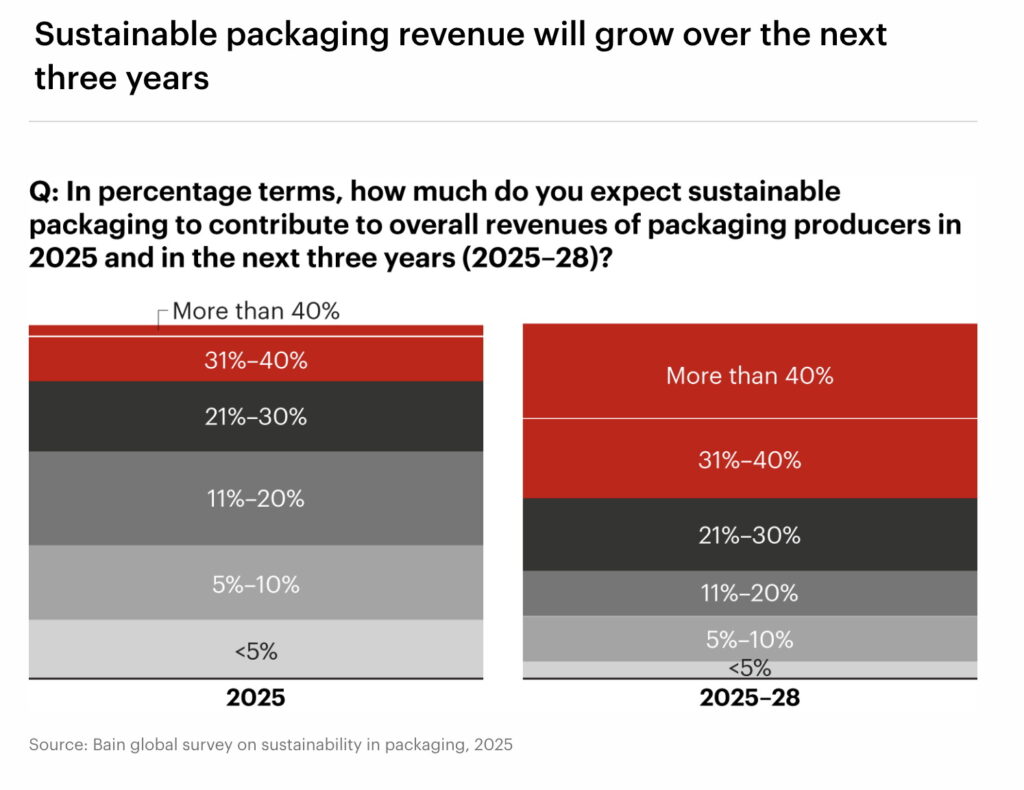
Sustainable packaging is expected to grow over the next three years.
Source: Bain global survey on sustainability in packaging, 2025.
The regulatory context: towards right-sized packaging
The European regulatory framework is also moving towards a more efficient use of resources. The new Packaging and Packaging Waste Regulation, Regulation EU 2025/40, entered into force on 11 February 2025 and most of its provisions will apply from 12 August 2026. Among the principles relevant to the sector is the progressive minimisation of packaging weight, volume and components, while preserving its essential functions: protection, safety, transport and consumer acceptance.
The regulation also addresses the empty space ratio for grouped, transport and e-commerce packaging, which must not exceed 50% by 2030. Space occupied by filling materials is also considered empty space.
This direction is also reflected in client requests. As highlighted by Silvia Pozo, Structural Packaging Manager at EGISA, there is a growing need to design packs that are more closely adapted to the product itself, reducing unnecessary volume and empty space: “An increasingly frequent request concerns packaging right-sizing: developing solutions that are closer to the real dimensions of the product, reducing air, unused volume and empty space, without compromising protection, quality and process efficiency.”
Although these provisions concern specific areas of packaging, they confirm a broader direction: designing packaging that is more proportionate, efficient and consistent with the function it needs to perform.
Reducing volume with collapsible rigid boxes
For high-end packaging, the rigid box remains a central format: it communicates solidity, protection, care and value. At the same time, it occupies volume during transport and storage even before it is used.
This is particularly relevant at a time when brands are increasingly assessing the overall impact of packaging: how much space it takes up, how it is transported, how it is stored, how it affects supply-chain efficiency and how consistent it is with new regulatory expectations.
This is why, as a Group, we have worked extensively on optimising this format, developing an exclusive solution in the European landscape for the automated production of collapsible rigid boxes — where sustainability does not depend only on the material selected, but on the architecture of the packaging itself.
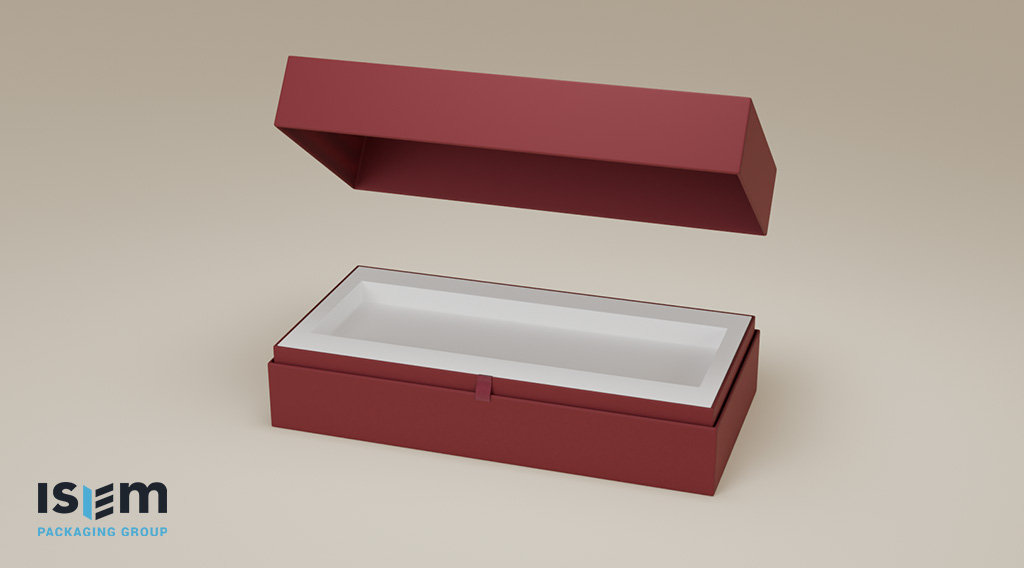
A collapsible box can be transported and stored flat, then formed at the moment of use, while maintaining the appearance and perception of a premium rigid box.
This transformation, from a completely flat structure into a fully formed high-end rigid box, provides a tangible illustration of the potential of packaging engineering. It demonstrates that innovation does not lie solely in materials or finishing techniques, but also in the ability of design to rethink how packaging is conceived, produced and used, while preserving the premium experience expected by brands and consumers.
The benefit is structural: reduced logistics volumes, greater storage efficiency and optimised industrial performance through dedicated production equipment.
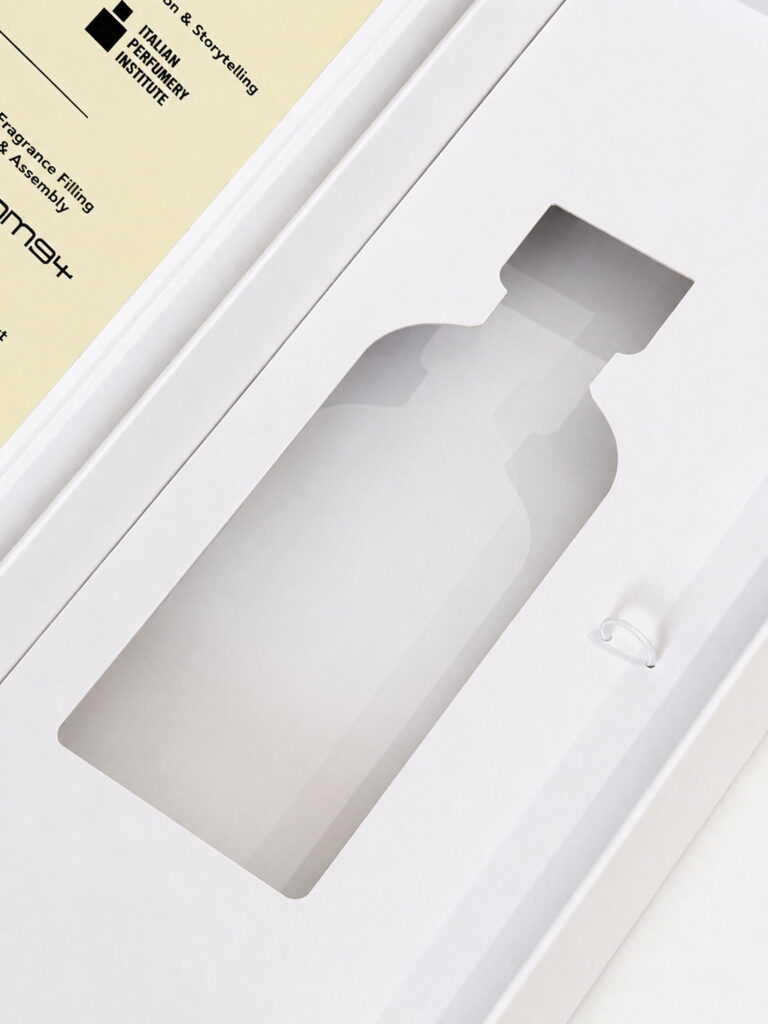
Rigid box created by ISEM Packaging Group as a partner of SILENZIO., the immersive olfactory project created by students of the Italian Perfumery Institute. Source: Italian Perfumery Institute.
Lighter structures, same performance
Another direction concerns weight. One example of this approach can be found in luxury gift boxes where traditional compact board structures are replaced by engineered micro-corrugated architectures. Depending on the design, this can reduce the weight of the empty pack by up to 30–50% while preserving the premium appearance expected by luxury brands.
Lifecycle assessments carried out during the development phase have shown that such structural optimisations can generate significant environmental benefits without compromising aesthetics, protection or brand perception.
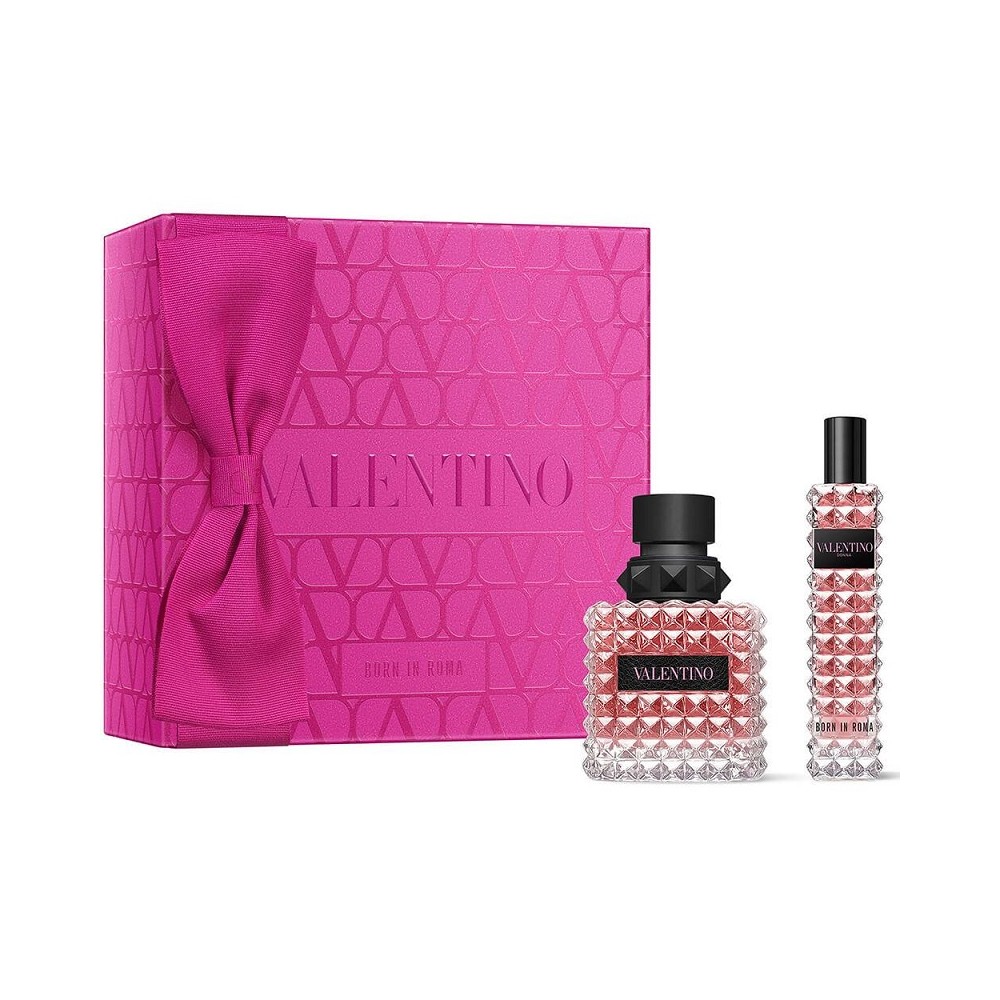
Source: EcoDesignCloud case study featured in the ISEM Packaging Group article “Designing luxury packaging with measurable sustainability“.
The same principle can be applied to interiors, through 100% paper solutions that make it possible to replace heavier or less coherent components while preserving protection, stability and presentation quality, without affecting the overall aesthetics of the packaging.
On this point, Silvia Pozo adds: “We are increasingly working on structural interiors integrated directly into the pack design. This makes it possible to reduce separate components, optimise the overall structure and maintain compatibility with automated packing processes.”
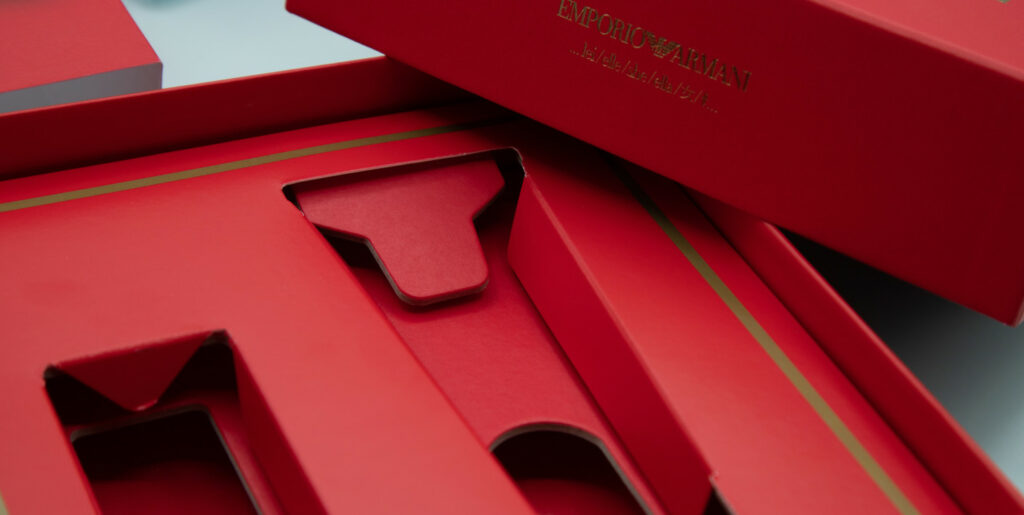
Invisible engineering: high-end paper-based interiors
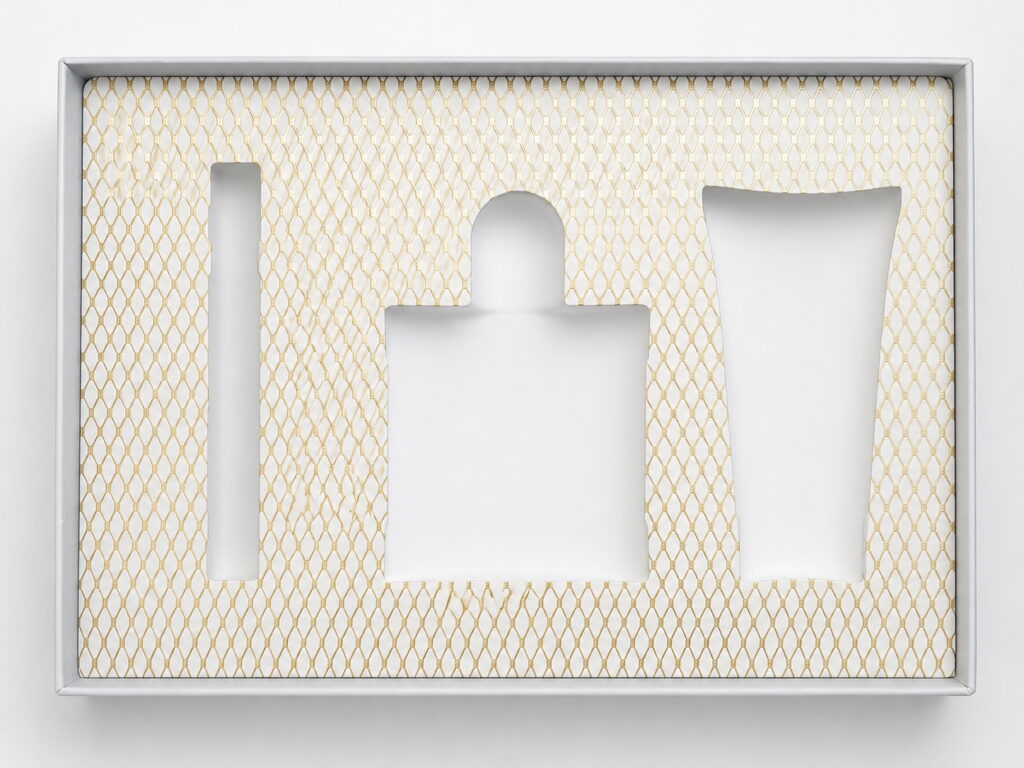
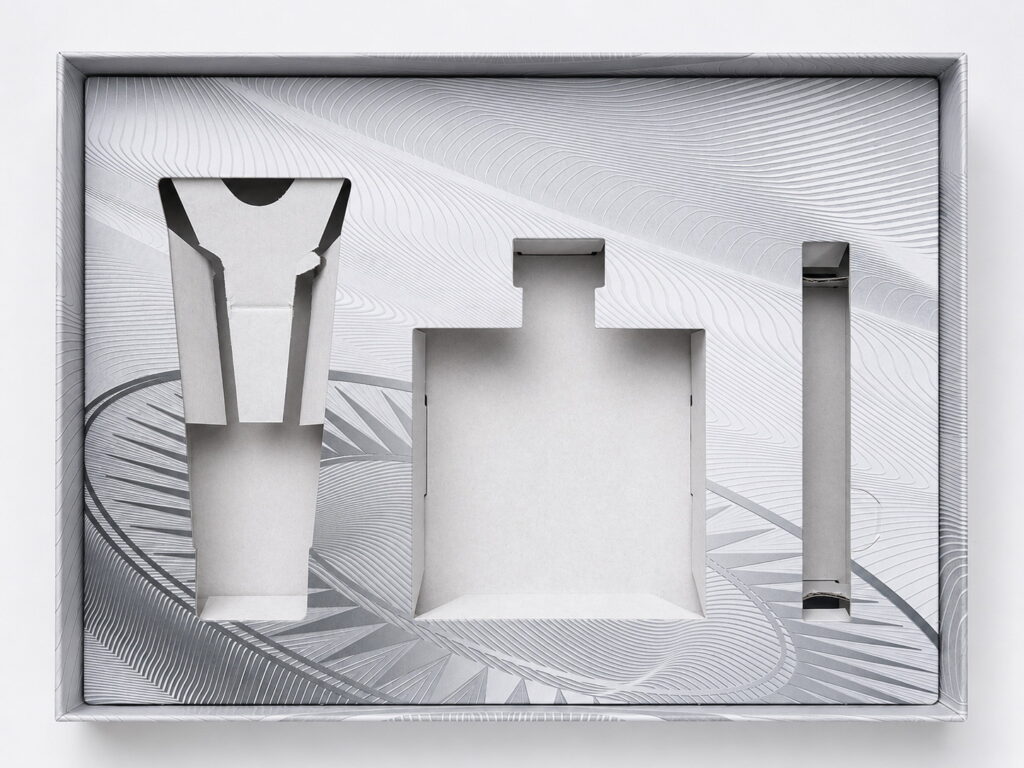
A further example concerns the development of paper-based interiors capable of replacing components traditionally made from foam or plastic, while maintaining an aesthetic result consistent with the expectations of luxury packaging.
In this direction, many are already familiar with Art-Eco, a patented and fully industrialised solution developed several years ago, designed for high production volumes and automated processes. Starting from the same design direction, in recent months our research and development teams have also worked on a new solution conceived for smaller production runs, where the visual quality of the interior and the level of detail require a more tailored approach.
As Michael De Nittis, Sales Director for the Italian Market, explains: “One of the critical issues with traditional paperboard inserts is that die-cut edges can reveal the internal structure of the material, while foam naturally provides clean, compact edges around the product. To overcome this limitation, the Group’s development team designed a paper-engineered structure capable of recreating a refined and continuous visual effect, while remaining entirely paper-based.”
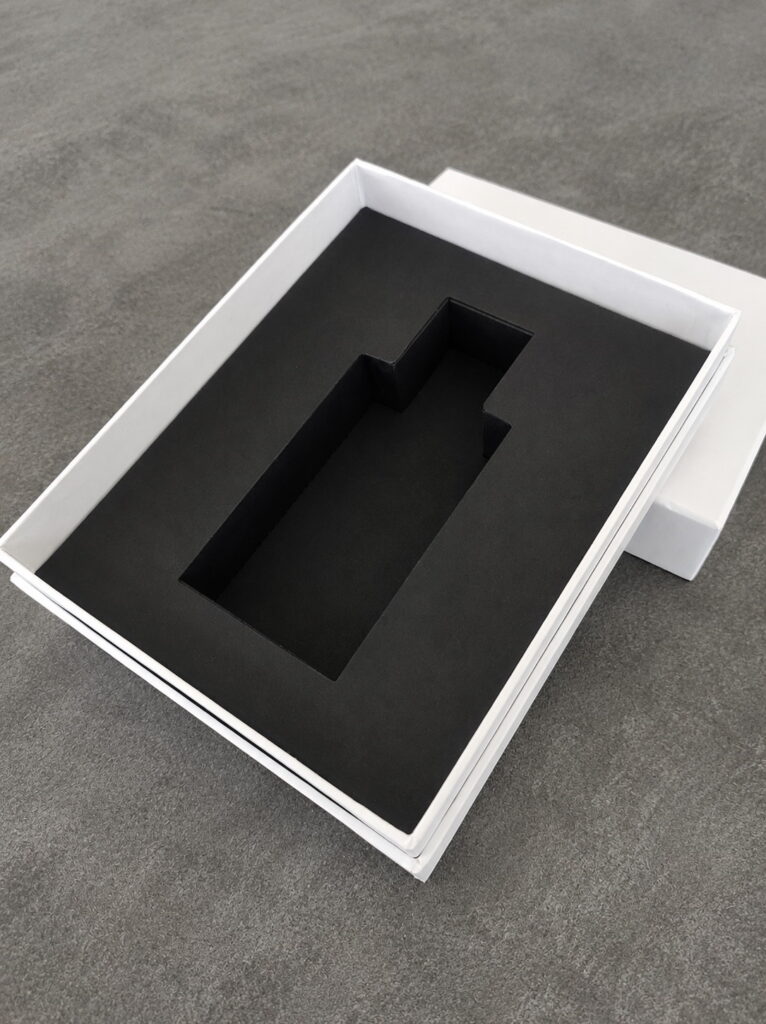
Beyond paper-engineered inserts, other fibre-based alternatives are also gaining momentum, including moulded cellulose pulp structures designed to replace plastic or foam protective elements. Although their visual language differs from traditional luxury inserts, they demonstrate how engineering can create new protective systems using recyclable fibre-based materials.
The value of the solution therefore lies in the engineering of its construction: the way paper is designed, processed and assembled makes it possible to reduce less sustainable components without sacrificing the luxury perception of the pack.
Rethinking premium formats
The traditional equation “heavier = more premium” is also increasingly being questioned. The value of packaging no longer depends only on its physical presence, but on its ability to be designed in a more efficient, coherent and functional way.
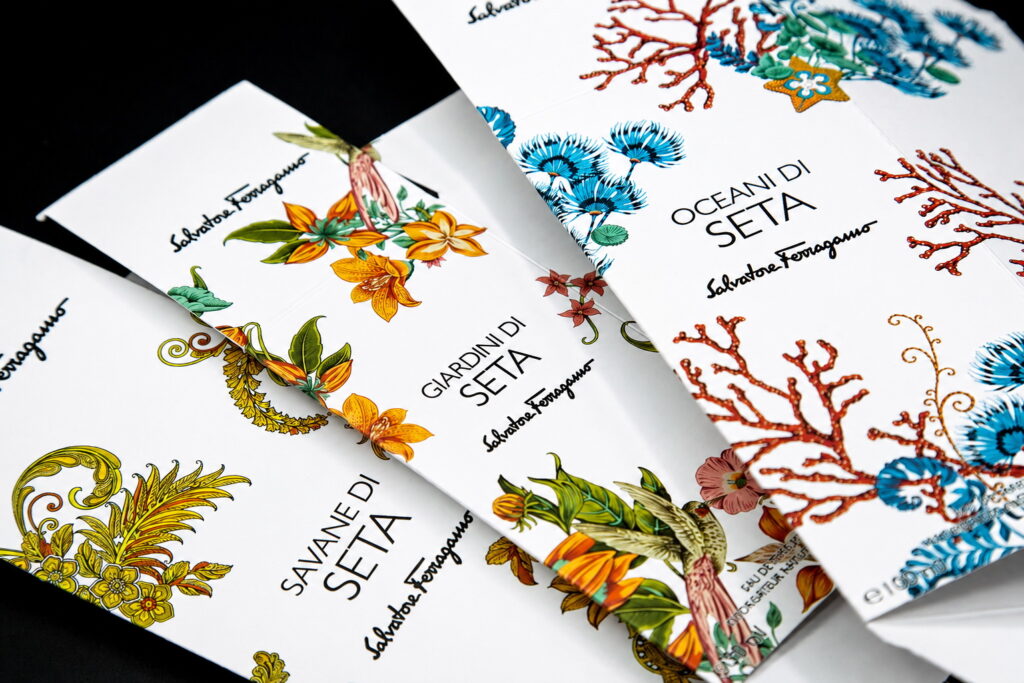
Folding cartons are a relevant example in this direction. Delivered flat, they naturally reduce volumes during transport and storage, while still offering wide possibilities for printing, finishing and customisation across categories such as beauty, fragrance, wines & spirits and premium goods.
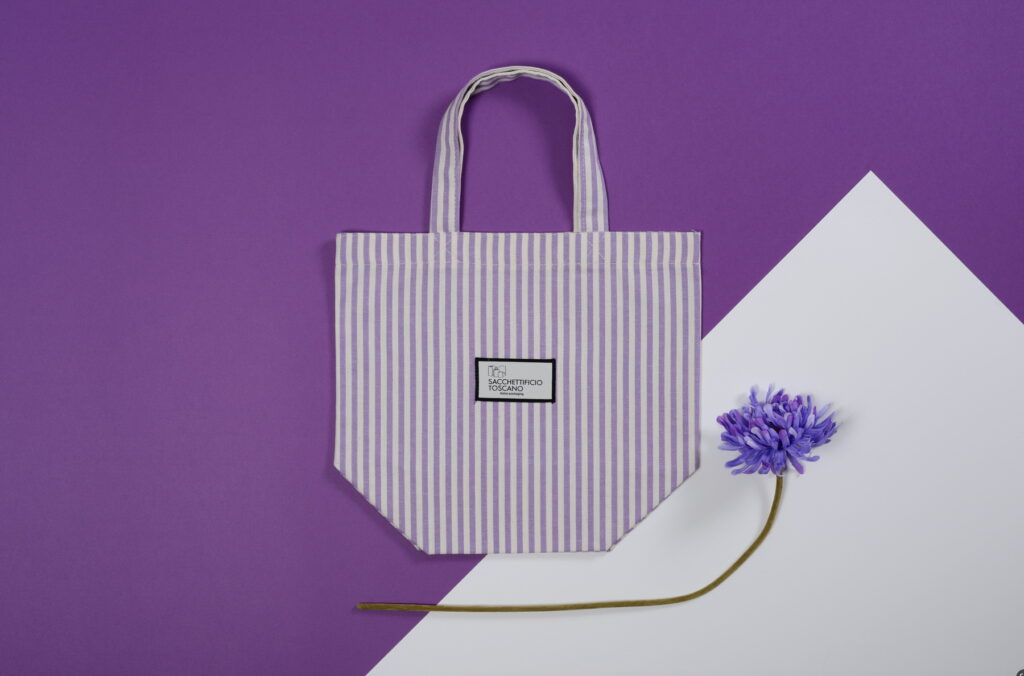
Textile packaging — including dust bags, shoppers, pochettes and other fabric-based solutions — also works around concepts such as durability, reuse and certified materials, including GRS and GOTS fibres. In doing so, it extends the role of packaging beyond containment alone.
In this context, the concepts of reuse and second life are also becoming increasingly relevant, with many brands now considering them an integral part of the packaging experience. As Silvia Pozo comments: “Packaging is assessed not only for its initial function, but also for its ability to continue living after purchase, while maintaining utility, quality and consistency with the brand.”
The point is not to reduce perceived value, but to design formats capable of expressing it in a different way: through efficiency, durability, functionality and greater consistency with new market expectations.
A Group-wide approach to engineered reduction
Many of the directions now emerging as trends in luxury packaging — volume reduction, lighter structures, logistics optimisation, certified materials, reusable solutions and a stronger focus on recyclability — have already been part of ISEM Packaging Group’s work for some time.
As a multinational Group, we believe our role cannot be limited to observing market evolution. It also requires us to help shape it through concrete, industrialisable solutions that can be applied across different product categories.
Collapsible boxes, lighter structures, paper-based interiors, folding cartons and textile packaging show how this approach can act on multiple levels: volume, weight, materials, recyclability, durability, storage and transport. This is particularly important for luxury brands, which today require packaging that preserves aesthetic quality, protection and recognisability, while also responding to increasingly concrete objectives.
The challenge is no longer to choose between sustainability and premium perception, but to design solutions in which both are integrated from the very beginning. Because the future of luxury packaging may no longer be defined by what is added, but by what is intelligently engineered away.